
The male reproductive organs, or genitals, are located both inside and outside the pelvis. Each component of the system plays an important role in the reproductive process.
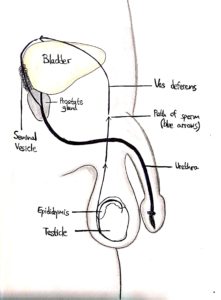
A male has two testicles, or testes, located in the scrotum. Ths scrotal sac is important since it regulates the temperature of the testicles, a factor critical to the ability to produce sperm. Inside the scrotum, the oval-shaped testicle can produce both sperm and the hormone testosterone. While some of the sperm is stored in the testes itself, most are passed along to the adjacent epididymis for storage. From the epididymis, the sperm-filled fluid travels through a tube known as the vas deferens to reach the urethra. (The vas deferens is also known as the sperm duct.) The urethra carries the semen outside the body through the penis.
The seminal vesicles and prostate gland are known as accessory glands. The seminal vesicles, attached to the vas deferens and the side of the bladder, produces the majority of the fluid that makes up the semen. The prostate gland provides a further portion of the semen’s fluid. Together, the liquid contributions of the accessory gland are known as the seminal fluid. The fluid mixes with the sperm and form the semen. During ejaculation, this semen is ejected from the body through the urethra.