Kruger’s Strict Criteria Morphology Assessment
One of the parameters assessed during a sperm analysis is morphology, the shape, and structure of the sperm cell. While there are several different standards for morphology assessment, the strictest method is Kruger’s.
Kruger’s strict criteria analysis is performed under a high magnification microscope. A large number (at least 100) of cells are counted individually and analyzed for structural abnormalities in the sperm cells. Results are reported as the percentage of sperm that appears normal.
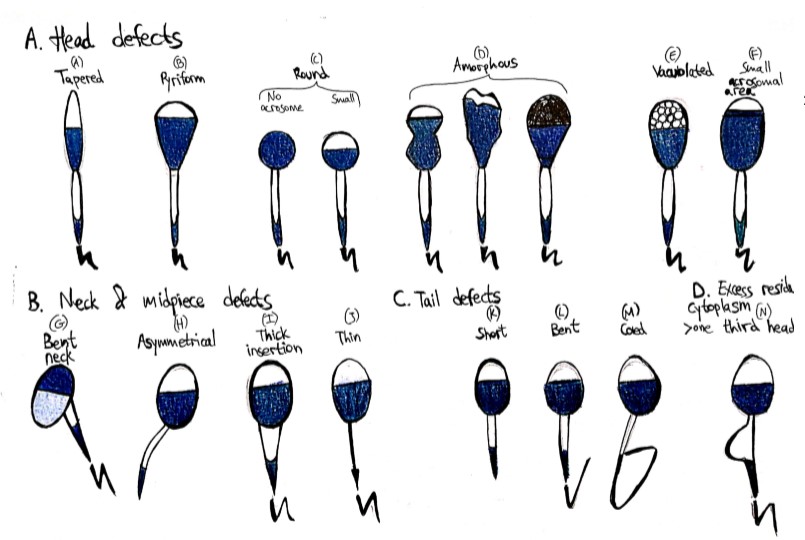
The microscopic analysis closely studies the main structures of a sperm cell, the head, and the tail. A normal cell will have an oval head and long tail, while abnormal cells may show any number of abnormalities, such as a deformed head or a double tail. Defects such as these have been shown to functionally impair the sperm, making it difficult to find and fertilize the egg.
However, it is considered normal for a large percentage of the total sperm cells to be classified as abnormal. According to Kruger, a score of less than 4% normal morphology may result in low pregnancy rates, even when all other parameters measure as normal. A score of 4% or higher is considered completely normal, and the normal percentage does not usually exceed 14%.
Should I add in a specific detailed description of what a normal sperm is according to Kruger? Will definitely require illustration if so
Oval head
Well defined acrosome (40-70% of head)
Head length 4-4.5 um, width 3 um.
Length to width ratio of 1.5
If right shape but wrong size still abnormal
Midpiece length 1.5times the head length
Midpiece width less than 1um
Tail 45 um
Tail not coiled, thinner than midpiece
Leftover cytoplasmic drops (produced in sperm production) will render sorry abnormal if they are more than ½ size of the sperm head